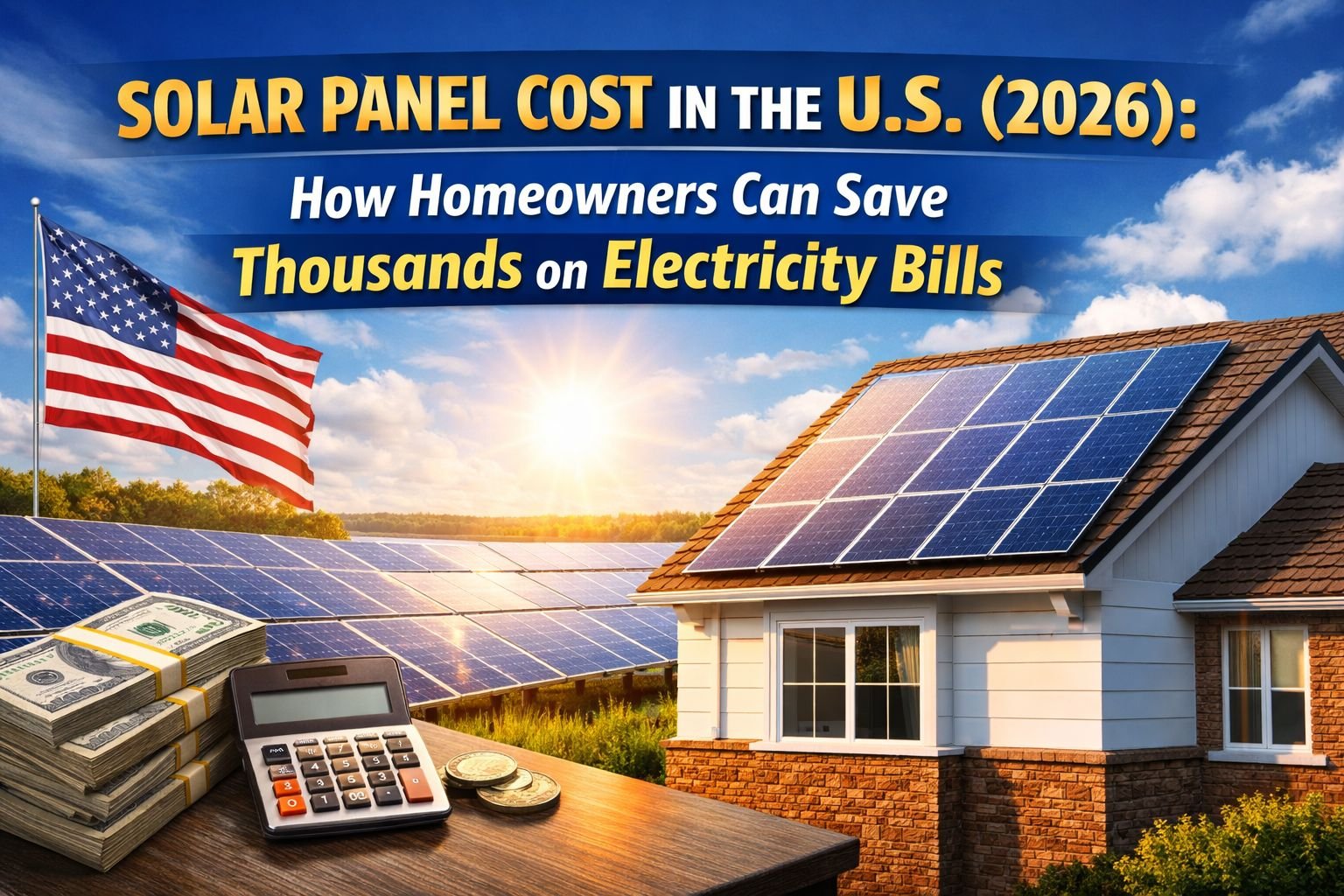
Rising electricity prices across the United States have pushed many homeowners to look for smarter energy solutions. One option that continues to gain popularity is installing solar panels at home. With modern solar technology, federal tax incentives, and flexible solar financing options, switching to solar power has become more accessible than ever.
For many households, solar panels are not just about sustainability — they are a long-term financial investment that can reduce electricity bills and increase property value.
How Much Do Solar Panels Cost in the United States?
The average cost of installing solar panels in the U.S. typically ranges between $15,000 and $25,000 for a residential system before incentives. However, the exact price depends on several factors, including:
- The size of the solar system
- Roof type and installation complexity
- Local electricity rates
- State and local incentives
After applying federal tax credits and rebates, many homeowners end up paying significantly less than the initial installation price.
Federal Solar Tax Credit Can Reduce Costs
One of the biggest financial incentives available to U.S. homeowners is the Federal Solar Investment Tax Credit (ITC). This program allows eligible homeowners to deduct a portion of their solar installation costs from their federal taxes.
For many households, this tax credit can reduce the total cost of installing solar panels by thousands of dollars. Because of this incentive, the return on investment for solar systems has become much more attractive.
Solar Financing Options for Homeowners
Not every homeowner wants to pay the full cost of solar installation upfront. Fortunately, there are several solar financing options available in the U.S., including:
Solar Loans
Solar loans allow homeowners to install solar panels with little or no upfront cost and pay monthly installments instead.
Solar Leases
With a solar lease, a solar provider installs and maintains the system while the homeowner pays a monthly fee for using the energy produced.
Power Purchase Agreements (PPA)
Under a PPA, homeowners pay for the electricity generated by the solar system rather than the system itself.
Each option has its own advantages depending on the homeowner’s budget and long-term goals.
How Solar Panels Reduce Electricity Bills
Solar panels generate electricity directly from sunlight. This means homeowners can rely less on utility companies for power.
In states with net metering policies, homeowners can even send excess electricity back to the grid and receive energy credits. Over time, these savings can significantly reduce monthly electricity bills.
For households with high energy usage, solar systems can offset a large portion of their utility costs.
Solar Panels and Home Value
Real estate research shows that homes equipped with solar energy systems often attract more buyers and sell faster. Energy-efficient homes with lower operating costs are becoming increasingly attractive in the housing market.
Solar installations can be viewed as a long-term home improvement that benefits both current homeowners and future buyers.
Is Solar Energy Worth It in 2026?
With rising energy prices and growing interest in renewable energy, solar power continues to be one of the most practical home upgrades in the United States.
Advancements in solar technology have improved efficiency while reducing installation costs. Combined with government incentives and financing programs, solar energy has become more accessible for homeowners across many states.
For those looking to reduce electricity costs and invest in sustainable energy, solar panels are becoming an increasingly popular solution.
Final Thoughts
Solar energy is transforming the way American homeowners power their homes. With financial incentives, flexible financing options, and long-term energy savings, installing solar panels is no longer just an environmental choice — it is also a smart financial decision.
As more households explore renewable energy options, solar power is expected to remain one of the fastest-growing energy solutions in the United States.